
What Foreign Institutions Need Before Reviewing a Bangladesh Trade-Finance Opportunity
An institution considering trade exposure in a new market needs organised, verifiable information about the parties involved — not narrative, not aspiration.
What foreign institutions need for a first review
Foreign institutions reviewing a Bangladesh trade finance opportunity start with a practical question: is there enough reliable information to decide whether a discussion is relevant? A clear introduction does not establish eligibility or secure a facility. It helps the institution identify the parties, understand the proposed transaction and decide what information to request next.
Foreign institutions receive many approaches. A summary that lets them decide quickly whether to look further is more valuable than a comprehensive document they never finish reading. Brevity and accuracy carry the first conversation. The supporting evidence can be detailed; the initial explanation should still make the commercial purpose understandable without requiring the reader to reconstruct it from attachments.
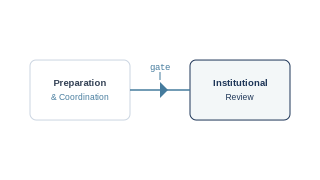
This guide helps foreign institutions, local banks, businesses and project sponsors prepare for an introduction. It explains how to organise a review pack, distinguish a request from an approval and respond to information gaps. Accord coordinates preparation, documentation readiness and institutional communication. Screening, pricing, credit assessment and decisions remain with the relevant institutions.
In this article

Define the Bangladesh trade finance request
Parties and their roles, the instrument or facility contemplated, amount, currency, tenor, the commercial purpose, documentation status and the local banking picture are the starting points. Without these, foreign institutions cannot assess whether a request falls within their policies.
Explain what foreign institutions are being asked to consider. An introduction concerning L/C confirmation is different from a request to discuss a bank limit or a project requirement. Name the intended conversation and identify which details are confirmed. If the structure has not been agreed, describe that uncertainty instead of presenting an assumed solution as an institutional proposal.
Separate the underlying commercial transaction from the proposed financial arrangement. Identify the buyer, seller and relevant banks without treating their roles as interchangeable. Record the expected shipment or execution timetable and the proposed payment timing separately. A useful summary makes it possible to ask a specific follow-up question, even when the institution is not yet ready to assess terms.
The transaction summary preparation guide provides a practical starting structure. Use it to organise known facts, not to imply that every institution requires an identical application format.
Make local-party information verifiable
Corporate and ownership information, operating and trade history, and existing banking relationships form the backbone. Publicly available background of the local bank helps foreign institutions place the counterparty.
Use consistent legal names across the introduction, corporate records and commercial documents. Explain the relationship between a trading name and the legal entity where necessary. Identify the person authorised to coordinate the enquiry and distinguish that contact from the people who can approve the transaction or enter into agreements.
Present operating experience through relevant evidence rather than broad claims. A concise description of the business, the goods or services involved and its normal trading pattern is usually more useful for an initial conversation than an unrelated corporate presentation. Label the source and date of financial information. Do not describe an unaudited figure as audited, or an estimate as a completed transaction.
Use the company profile checklist to identify missing background information. Foreign institutions determine the documents they will accept and whether additional verification is needed.
At a glance
Coordinate compliance information without claiming clearance
When foreign institutions request know-your-customer or background information, it must be collected from the local parties and presented consistently. Screening and assessment remain entirely with the institution.
The FATF Recommendations provide international context for customer due diligence, including customer and beneficial-owner identification. They are not a substitute for the institution’s requirements or applicable local law. This article does not prescribe a complete regulatory checklist for a particular transaction.
Record what has been requested, who is responsible for supplying it and whether it is available. Clarify inconsistencies through the party that owns the information. An explanation from an intermediary does not replace verification by foreign institutions. Sensitive identity, ownership and financial documents should be shared through an agreed channel with the appropriate permission, rather than distributed indiscriminately in an initial approach.
Describe status precisely: requested, received, under review or still outstanding. Avoid terms such as cleared, approved or compliant unless the relevant institution has expressly confirmed that status for the purpose being discussed.
Build a readable review pack
A pack for foreign institutions should connect the summary to supporting evidence without losing the thread. Put the decision-relevant explanation first, then organise attachments around the questions that explanation raises.
Keep previous versions internally, but send foreign institutions a clearly identified current pack. When a figure changes, update the summary and the affected supporting schedule together. If an important attachment is unavailable, explain the gap and the proposed next step. Concealing missing information usually makes the follow-up conversation less productive.
The foreign institution discussion pack connects these preparation tasks. Its purpose is readiness for discussion; it does not establish an institution’s willingness to participate.
Summarise parties, instrument, amount, currency and tenor on one page, with uncertainties clearly marked.
Attach relevant corporate and ownership documents for each local party, subject to the recipient’s requirements and agreed information-sharing arrangements.
Record the local bank and any existing dialogue; identify who confirmed the status.
Name a single coordination contact and identify the requesting party’s decision owner.
Maintain an attachment index with document names, dates, versions and outstanding items.
An illustrative readiness example
Consider a hypothetical introduction containing an amount and a requested tenor but no clear description of the proposed instrument. The company profile uses a trading name, while the commercial documents use a different legal name. The immediate task is to clarify the request and reconcile the names, not to circulate the same pack to more institutions.
A useful next version would explain the commercial purpose, identify the legal entity and any trading-name relationship, state what the local bank has actually indicated and list the questions still open. Foreign institutions can then decide whether the discussion is relevant to their policies. This example illustrates document preparation only. It is not an account of an Accord transaction or a prediction of approval.
Turn questions into an evidence index
Foreign institutions may approach the same enquiry from different starting points. One team may first ask about the local bank; another may need to understand the company or the underlying transaction. A simple evidence index helps the coordination contact answer each question without sending the full pack again.
For each item, record the question being answered, the source document, its date, the person responsible and any qualification. A company presentation can explain a business model, but it should not be described as verification of ownership. A proposed transaction schedule can explain timing, but it should not be presented as evidence that a bank has agreed to participate.
Separate information supplied by the company from information confirmed by a bank or another counterparty. If there are differences, record them clearly and seek clarification from the relevant source. Foreign institutions should be able to distinguish confirmed facts from the requesting party’s assumptions.
Use the index to prioritise the next action. A missing name or unclear requested instrument may prevent a useful preliminary discussion. Other attachments may be requested later. The institution decides what is necessary at each stage; the index supports that conversation rather than attempting to replace its review process.
Separate the local bank’s position from the company’s request
A company may wish to pursue an arrangement before its local bank has reviewed the proposed terms. Foreign institutions need the status described accurately. Identify whether the company has only raised an enquiry, whether the bank has requested information or whether a named bank contact has communicated a specific position.
Record the date and scope of any confirmation and use an agreed contact channel. Do not treat an informal discussion, an older transaction or a document bearing a bank’s name as evidence of current commitment. A different amount, tenor, counterparty or instrument may require a fresh institutional decision.
The parties can prepare a clear summary while these questions remain open. It should state what has been discussed and what has not. That approach allows foreign institutions to ask relevant questions without being led to believe that another party has already approved the arrangement.
Agree how questions and changes will be handled
Foreign institutions do not all work to the same timetable. Agree who will receive questions, who can supply each document and who can authorise changes to the request. Avoid promising a response date, fee or financing term that the relevant institution has not confirmed.
When a material detail changes, identify the change prominently. Explain whether it affects the amount, timing, parties, commercial purpose or requested structure. Send a revised summary and the affected supporting evidence together, instead of expecting the recipient to infer the change from an attachment.
Keep a record of what was sent, to whom and under what permission. Ask before sharing sensitive documents beyond the agreed recipients. If the requesting party is not ready to provide necessary information, communicate that limitation. An orderly pause is more accurate than representing an incomplete pack as ready for a decision.
The result should be a reviewable, traceable enquiry. Foreign institutions retain responsibility for deciding whether to proceed, what further assessment is necessary and whether any proposed terms are acceptable. Accord can coordinate the preparation and follow-up without implying control over those outcomes.
Foreign institutions: assemble a first-review brief
A first-review brief should let a receiving team understand the request without treating every statement as established. Keep known facts, proposed terms and open questions distinguishable. The working structure below is an organising aid, not an institution’s application form or a universal list of documents. Adapt it to the recipient and the discussion you are authorised to initiate.

| Brief section | What to make clear |
|---|---|
| Request and purpose | Describe the commercial purpose and the discussion sought. Identify which instrument or facility is contemplated without representing it as approved, available or suitable for every participant. |
| Parties and local-bank position | Identify the applicant and other relevant parties by role. Record the applicant’s stated banking position with its source and date; separate that statement from a bank’s own communication. |
| Trade cycle and timing | Connect the proposed requirement to the actual commercial sequence. Label estimates and unresolved timing assumptions, and identify which documents support dates or conditions already described as agreed. |
| Evidence currently available | List the relevant records actually held, with dates or versions where useful. Distinguish material that can accompany a general introduction from confidential records requiring an agreed secure delivery route. |
| Open questions and next step | Identify what remains unknown, who can supply clarification and the specific preliminary response requested. Do not conceal an unresolved material point simply to make the brief appear ready. |
An illustrative opening, not a real submission
An opening could read: “We request a preliminary discussion about [commercial purpose] involving [identified parties]. The proposed requirement concerns [instrument or facility discussion], with [amount, currency and timing] still subject to the relevant parties’ review. Our summary distinguishes supported facts from estimates. The indexed records currently available are [list]. The following matters remain open: [questions and responsible sources]. The applicant’s stated local-bank position is [status and date]. Please indicate whether this falls within the type of discussion your team may consider and the appropriate route for further information.”
This is illustrative wording, not a completed Accord transaction or an actual bank communication. Replace placeholders only with information that the responsible party can explain and has authorised for that recipient. Omit information that is not yet available rather than filling the space with a reassuring assumption.
Check each statement against its source
Before circulation, ask someone who did not assemble the brief to locate the source for each material assertion. They should be able to distinguish a company’s explanation from a contract, a current draft, a dated estimate or an institution’s own response. A source reference is a way to find and assess evidence; it is not certification that a document is authentic or that its contents have been independently verified.
If a statement cannot be supported, narrow it to what is actually known or mark the question open. Do not change a third-party document to fit an internal summary. Where two records differ, identify the versions and seek clarification from the appropriate source. Keep that clarification with the working record so the next reviewer can follow the correction.
Ask for a bounded next step
The next step should be a specific information or discussion request, not an implied demand for financing approval. For example, ask which team should receive the requirement, whether a preliminary discussion is relevant, or which missing facts would make that conversation more useful. Record the reply according to what it actually says. Receipt, a request for more information and an institutional decision are different communications.
Keep confidential financial, identity and banking records off an unsolicited introductory email. Confirm the recipient’s role and the appropriate secure channel before sharing them. When a material fact changes, update the brief’s version and explain the change to the people already reviewing it. This keeps the Bangladesh opportunity understandable without overstating readiness or the scope of any institutional response.
If a discussion is deferred or declined
Foreign institutions may decide not to proceed even when the pack is well prepared. A request can fall outside their current market, product, counterparty or other internal parameters. Clear documentation improves the quality of a review; it does not remove those institutional choices.
Ask whether any next step has actually been offered. Distinguish a request for missing information from a decision not to consider the enquiry. Record the response without recasting a decline as an approval in principle. If the institution has not explained its reasons, do not invent an explanation or suggest that a particular document change will reverse the decision.
Where further information is invited, identify the specific gap and the party responsible for responding. Check whether the commercial requirement has changed during the discussion. An updated request should make those changes visible rather than continuing to use a summary that no longer reflects the parties’ needs.
A new introduction requires its own relevance assessment and appropriate permission to share information. Avoid sending sensitive documents widely on the assumption that more approaches will produce a better outcome. Foreign institutions should receive information through an agreed channel, with a clear understanding of the request and the source of the evidence.
Accord can help organise the record, identify preparation gaps and coordinate an authorised follow-up. It cannot promise that another institution will take a different view or offer a facility. That distinction keeps the next conversation accurate and preserves the requesting party’s control over its information.
Questions from foreign institutions and the next conversation
Respond to an information request by identifying the question, supplying the relevant evidence and explaining any limitation. Keep a simple action log so the parties can see what changed and what remains outstanding. Do not interpret a request for more information as an offer, a commitment or an indication that approval is likely.
The IFC Global Trade Finance Program overview is useful background on distinct issuing-bank and confirming-bank roles. A reference to that programme does not suggest that Accord or a particular enquiry participates in it.
For a Bangladesh trade finance enquiry, start with the facts already available and identify the unresolved questions. Accord’s foreign institution coordination support and facilitation process explain its preparation role. A requirement review can help organise the discussion, while all institutional decisions remain with the relevant institutions and contracting parties.
A pack too long to be read in one sitting, without a concise opening summary.
No clear ask or instrument stated, even though financial terms are requested.
Missing ownership or compliance information that the institution has requested.
No single coordination contact, leaving questions unanswered or answered inconsistently.
Role reminder
Accord coordinates preparation, documentation readiness and institutional communication. Accord is not a bank, lender, issuer, confirmer, guarantor, funder or credit decision-maker. All facilities, pricing, security, due diligence, compliance, approval, issuance, confirmation and decisions remain with the relevant institutions and contracting parties.
An institution considering trade exposure in a new market needs organised, verifiable information about the parties involved — not narrative, not aspiration.
Begin with a Structured Requirement Review
Share the transaction, the parties and the documentation you already hold. Accord will organise the rest and tell you plainly what is missing.