
Skip to content
Start Requirement ReviewStart Review

Service

Preparing UPAS L/C Requirements for Institutional Discussion

UPAS LC coordination (also written UPAS L/C coordination) organises applicant, issuing-bank, beneficiary and institutional information for preliminary discussion. Accord prepares the commercial purpose, requested tenor, settlement logic and supporting records before institutions are approached.

UPAS Transaction Route

  1. Applicant / Importer

    Company profile, trade history

  2. Issuing Bank

    Applicant's market

  3. Beneficiary / Exporter

    Commercial counterparty

  4. Relevant Institution / Counterparty

    Advising / negotiating / discounting

Accord Coordination

Preparation & coordination layer — not a party to the transaction.

  • Requirement structuring
  • Documentation readiness
  • Institutional communication

Accord does not issue, confirm, discount or refinance the L/C.

Role boundary. Accord does not issue, confirm, discount or refinance an L/C and does not make institutional credit decisions.

UPAS LC coordination: purpose and timing

Parties in UPAS LC coordination

  • Applicant / importer

  • Issuing bank in the applicant's market

  • Beneficiary / exporter

  • Advising, negotiating or discounting institution identified by the banks

  • Any additional commercial parties named in the underlying contract

Simplified transaction route

  • Underlying commercial contract or proforma invoice is agreed between applicant and beneficiary

  • Applicant approaches its bank with the requested instrument, amount, currency and tenor

  • Issuing bank reviews limits, security and compliance internally

  • If issued, the credit is advised to the beneficiary through the banking channel

  • Documents are presented and settled in accordance with the terms of the credit
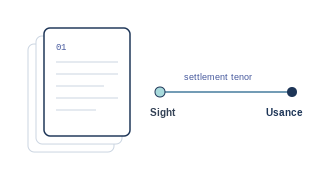
Tenor & Document Readiness
UPAS LC coordination preparation illustrating sight and usance settlement tenors.

Importer information commonly organised

  • Company profile, ownership and management summary

  • Trade history and typical import volumes

  • Existing banking relationships and facility position

  • Purpose of the current requirement and intended usage

Issuing bank information

Where an issuing bank has already been identified, record its name, location, responsible contact and the status of discussion. Distinguish a bank approached for information from one that has confirmed its role. In UPAS LC coordination, keep the requested tenor and settlement timing separate from any terms actually communicated by the bank. Where no bank is identified, describe the requirement for preliminary discussion only. The guide to applicant, beneficiary and bank roles helps organise those responsibilities.

Beneficiary and commercial information

  • Beneficiary legal name, country and business description

  • Goods or services, quantity, specification and incoterms

  • Shipment origin, destination and expected schedule

  • Contract, proforma invoice or purchase order references

Organised trade documentation preparation workspace for UPAS LC coordination

Amount, currency, tenor and settlement logic

The requested amount, currency, usance period and the intended point of settlement are stated plainly, with the commercial reasoning behind each. Any pricing, cost or fee position is a matter for the institutions concerned and is never presented by Accord as agreed or indicative.

Documentation checklist

  • Company profile and registration documents

  • Transaction summary

  • Proforma invoice or sales contract

  • Commercial invoice where already issued

  • Packing list and transport documents where applicable

  • Bank details and existing facility information

  • Financial information as requested by the reviewing institution

Information Architecture

Document Flow

  1. Contract

    Applicant ↔ Beneficiary

  2. Issuing Bank

    Instrument request

  3. Advising

    Banking channel

  4. Presentation

    Documents & settlement

Accord's role

Accord structures the requirement, organises documentation, prepares the information pack, identifies potentially relevant counterparties, coordinates introductions and manages information exchange and follow-up until the parties are in direct contact. Use the UPAS L/C readiness checklist and UPAS L/C coordination guide to distinguish confirmed information, missing records and the next institutional question.

Institutional responsibilities

Credit assessment, limit allocation, security, pricing, compliance screening, issuance and confirmation are decided solely by the institutions involved, under their own policies and applicable regulation.

Common gaps

Practical UPAS LC coordination questions

What if the supplier and applicant describe different timing? Record each expectation separately and identify the bank document or instruction needed to establish the actual position. Beneficiary settlement and applicant repayment are separate preparation questions. Do not turn a supplier expectation or requested tenor into an agreed institutional term merely to complete the summary.

What should be clarified before another version is circulated? Identify the changed date or assumption, its source and the documents affected. Keep draft or unconfirmed information labelled. The relevant institutions establish the actual structure and terms; Accord can coordinate questions and records but cannot promise a payment date, price, approval or availability.

Illustrative UPAS LC coordination scenario. In a fictional preparation example, the applicant asks for deferred repayment while the supplier expects settlement at sight. The next message should state both positions and the missing confirmation, rather than claim that the combination is agreed. Use the source illustration to give each timing question an accountable owner.

UPAS LC coordination: check settlement and repayment against their own sources.
Illustrative preparation aid; the relevant parties and institutions retain their own responsibilities and decisions.
  • Tenor requested without a matching commercial cycle

  • Beneficiary details inconsistent between contract and invoice

  • No clear statement of intended repayment or settlement source

  • Incomplete company profile or outdated financial information

Key takeaway
A missing company profile, inconsistent party names or an unexplained tenor assumption are preparation gaps to clarify before institutional discussion.

Keeping UPAS LC coordination information current

Which bank position belongs in the current request? Identify the issuing bank’s actual communication, the version it concerns and any stated qualification. A requested tenor or a client’s summary of a conversation is not automatically a confirmed institutional term. If a revised record arrives, distinguish receiving the new file from reviewing its effect on the request. The two-track illustration is a useful reminder that version control and completed review are separate questions.

In an illustrative UPAS LC coordination update, a changed commercial date may affect the explanation previously shared with an institution. Identify the change, its source and the parties that received the earlier version. Ask the responsible source which related records or assumptions need clarification rather than rewriting a bank’s position yourself. Keep unresolved timing questions visible. This method supports a more accurate discussion; it does not determine a repayment schedule, provide credit approval or establish that an institution will accept the proposed arrangement.

For the working detail, use UPAS L/C Readiness Checklist.

UPAS LC coordination: a new document version is separate from a completed review.
Illustrative preparation aid; record the actual source, version and review status without inferring institutional approval.

Four preparation checks for UPAS LC coordination

Before requesting a discussion, distinguish the desired commercial arrangement from the institutional position presently known. The four checks below help organise that distinction. They are preparation prompts, not eligibility rules, a bank’s document requirements or a procedure that guarantees consideration. Use the actual sources and qualifications rather than completing a check with an unsupported assumption.

UPAS LC coordination is easier to scope when the initial enquiry shows which question remains open. A supplier’s preferred settlement timing, an applicant’s requested repayment period and an institution’s communicated position are separate inputs. Their inclusion in the same summary does not establish that they are compatible or agreed. The relevant institution determines the terms it is prepared to consider.

The checks can also identify when a request needs clarification before more material is assembled. If the parties cannot explain the underlying requirement, begin with that explanation. If the requirement is clear but the bank position is not, make the institutional question explicit. UPAS LC coordination should make this distinction visible, not conceal it behind a product label.

  • Commercial purpose. Can the source explain the actual purchase or trade requirement, the applicant and beneficiary, and why the requested settlement arrangement is being discussed? Identify an unclear party or purpose before treating the instrument name as a complete requirement.

  • Separate timing positions. Can the summary distinguish the beneficiary’s stated settlement expectation from the applicant’s requested usance period? Identify the source of each position and whether the relevant institution has communicated any actual terms.

  • Institutional status. Is a named bank’s role described as proposed, under discussion or actually communicated by that bank? Preserve any qualification. A contact name or previous relationship does not establish participation in the current requirement.

  • Next answerable question. Does the pack identify which source or institution can answer the principal unresolved point? A broad request for “UPAS support” is less useful than explaining the missing timing, party, document or institutional clarification.

Describe the timing question without selecting the bank’s terms

The preparation summary should make the timing question understandable in its own terms. State the requested period, the commercial reasoning and the source of the request. Where the relevant starting event or settlement assumption is unclear, identify that uncertainty. Do not calculate or present an agreed schedule from a supplier quotation or a client’s preference alone.

For a hypothetical requirement, a company supplies a requested usance period but does not explain the event to which that request relates. A useful UPAS LC coordination task is to record the missing explanation and ask the appropriate source or institution to clarify it. Choosing a convenient date would not resolve the underlying question and could make the summary appear more certain than the records support.

Keep separate the timing described in commercial correspondence and any position actually communicated by the institution. If a proposed arrangement depends on another party’s action, identify that dependency rather than incorporating it as an established event. The applicable instrument wording and institutional terms must be considered by the parties responsible for them.

UPAS LC coordination can organise these questions for direct discussion. It does not decide the usance basis, determine a payment date or promise that a combination of requested terms is available. The preparation output is a clearly attributed timing question with its limitations, not a schedule issued on behalf of a bank.

Clarify the coordination scope when a bank is already involved

An existing banking relationship changes the context of an enquiry, but it does not by itself answer the current requirement. Identify whether the relevant communication concerns this transaction, a general discussion or an unrelated arrangement. Keep the bank’s own wording attached to its context. Avoid describing a familiar contact as confirmation that the institution accepts the proposed role.

Where the company has already approached an issuing bank, explain what coordination is still sought. The task might be organising the commercial explanation, identifying a missing source record or preparing questions for a direct discussion. UPAS LC coordination should complement the legitimate communication of the responsible parties rather than creating a competing account of what the bank has said.

If several institutions or contacts are mentioned, identify their proposed functions separately. Do not collapse every participant into the label “UPAS bank.” A party may have supplied information without expressing willingness to participate. If the actual function or authority is unclear, preserve that question for the relevant institution instead of assigning a role from the commercial objective.

The next communication should state which information is being supplied and what response is requested. UPAS LC coordination does not authorise Accord to instruct an institution or represent an unconfirmed position as agreed. The company and the institution retain their own channels, responsibilities and decisions; the coordination scope must remain clear alongside them.

Ask about costs and qualifications without presenting an indicative offer

Cost questions should be directed to the institutions or contracting parties responsible for the actual terms. A preparation note can identify which cost question remains unanswered without supplying an estimate or suggesting that a figure has been agreed. Keep commercial expectations separate from institutional pricing and from any separately documented coordination engagement terms.

For example, a hypothetical supplier communication describes its desired settlement amount while a company asks who would bear a particular charge. The useful preparation action is to identify that allocation question and its responsible source. It is not to infer a fee arrangement from the fact that the supplier expects settlement at sight. The actual parties must address the terms that apply to them.

In UPAS LC coordination, preserve the conditions attached to any institutional response. A discussion of one requested feature should not be used to describe every other feature as settled. If a communication leaves availability, pricing or another term open, keep that limitation visible when it is summarised. Obtain appropriate advice where interpretation goes beyond straightforward information coordination.

Use a short open-questions note to make the outstanding points legible. It can distinguish a requested term, a source statement and a response still needed. UPAS LC coordination supports that information task; it does not constitute an offer, a bank quotation, a guarantee of cost or a commitment that the requested arrangement can be completed.

Prepare a qualified UPAS handover for the next direct discussion

A useful handover connects the commercial requirement to the principal institutional question without implying that the institution has approved the arrangement. Identify the current summary, the relevant source records and the material limitations. The reader should be able to distinguish what the applicant requests, what the beneficiary has stated and what the bank has actually communicated.

UPAS LC coordination can help organise those inputs so a clarification is routed to the right source. If the next reader needs an answer about company facts, identify the company contact responsible. If the question concerns an institutional term or proposed bank role, the relevant institution determines its response. A coordinator’s progress account should not replace that answer.

Before describing a preparation task as complete, check that its stated question has been addressed or clearly left open. A document can be available while its relevance or meaning remains unresolved. The handover should preserve that distinction and identify any dependency that prevents a more definite explanation. Readiness to discuss is not a representation that issuance, funding, confirmation or settlement will occur.

Use the UPAS readiness checklist for the practical record and the linked educational article for the fuller instrument explanation. UPAS LC coordination remains a facilitation activity. The actual institutions and contracting parties retain the credit, compliance, pricing, documentation and commercial decisions, together with responsibility for the terms under which they may proceed.

Begin with a Structured Requirement Review

Share the transaction, the parties and the documentation you already hold. Accord will organise the rest and tell you plainly what is missing.