Use Trade Insights to understand preparation questions, then consult the relevant primary source and institution for the actual requirement. The following sources serve different purposes:
Trade Insights does not replace current institutional instructions, independent due diligence or professional advice. Accord remains a facilitator and coordinator, not a lender, issuer, confirmer, guarantor or credit decision-maker.
Choose Trade Insights reading by the question you need to answer
Trade Insights is a learning library rather than a sequence that every enquiry must complete. Begin with the question that currently prevents a clear explanation. You may need to understand an instrument, distinguish institutional roles, organise evidence or prepare for a particular audience. Those are different reading purposes. Selecting the relevant pathway is more useful than reading every article in publication order.
Use the category filters to narrow the library, then read the article that matches the immediate question. The pathways below explain why several articles may be useful together without reproducing their technical content. An introductory article can clarify terminology; a preparation article can help identify the information task that follows. Neither establishes that a proposed transaction is suitable or acceptable.
If an article reveals that the original question was framed incorrectly, revise the question before collecting additional material. Trade Insights should help readers make that distinction. Keep the relevant institution’s instructions and the actual transaction context separate from educational examples. The right next step may be a clarification request or independent advice rather than another article.
Related reading: Trade-Finance Facilitation vs Financing: Understanding the Role Boundary; Understanding the Roles of Applicant, Issuing Bank, Beneficiary and Confirming Institution.
Follow an instrument pathway without merging different bank functions
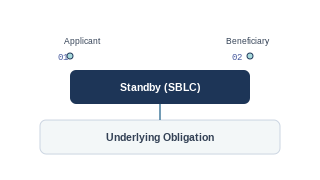
For a requirement already described as UPAS L/C, confirmation or SBLC, begin with the article devoted to that subject. Read it to understand the preparation questions within its stated scope. Do not combine the three labels into one undifferentiated request. Their articles have different purposes, and a reader should preserve those distinctions when preparing a discussion.
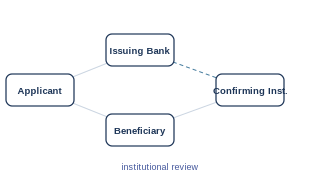
If the difficulty concerns who does what, pair the instrument article with the explanation of applicant, issuing-bank, beneficiary and confirming-institution roles. This Trade Insights pathway helps identify the party from whom a particular answer is needed. It does not authorise a participant to speak for another institution or establish that any instrument will be available.
After reading, use the corresponding readiness resource for the practical preparation prompts. Record the question that remains unresolved instead of copying entire article sections into a transaction summary. Trade Insights explains concepts; the working checklist organises preparation; the relevant institution decides its own requirements. Keep those three functions visible when sharing the resulting explanation.
Related reading: Understanding UPAS L/C Coordination; Preparing for an L/C Confirmation Discussion; SBLC Readiness: Information, Documents and Role Boundaries; Understanding the Roles of Applicant, Issuing Bank, Beneficiary and Confirming Institution.
Separate company-level facility preparation from a single transaction
A bank-limit or credit-line discussion can concern company context and a broader proposed scope, while a transaction summary explains a particular requirement. Begin with the bank-limit preparation article when that company-level distinction is the main question. Use an instrument article for a separate, identified transaction question rather than assuming that one type of pack answers both.
For Trade Insights readers supporting a company team, the documentation-readiness article can then help distinguish material present from questions still unresolved. A pipeline description is not an agreed facility, and a well-organised company pack is not a credit decision. The reading pathway should clarify the information relationship without inventing an institutional sequence or approval condition.
Prepare a short note describing which level the question concerns and which source can clarify it. If the proposed facility and the immediate transaction are related, explain that relationship without treating their values or timeframes as interchangeable. Trade Insights provides educational orientation; the institution determines how it will consider the actual company and transaction information.
Related reading: Preparing a Bank-Limit or Credit-Line Discussion Package; Why Documentation Readiness Matters in Trade Finance.
Read for the institution or sponsor who will use the explanation
A reader preparing for a foreign-institution conversation has a different starting point from a sponsor organising a project-linked requirement. Use the foreign-institution review article to orient the first audience question, or the project-sponsor readiness article to examine the second. The purpose is to identify the reader’s information needs, not to imply that every institution follows the same process.
Where a requirement involves both a project and a trade transaction, keep the two explanations connected but distinguishable. The sponsor narrative may supply context while a specific transaction has its own unresolved questions. Trade Insights can help the preparer recognise this dependency. It does not establish that a commercial milestone, project assumption or financing outcome has been confirmed.
Choose the related practical resource after identifying the audience and the question. Ask the responsible source to clarify facts that educational reading cannot establish. Trade Insights should reduce ambiguity in the preparation task, not encourage a reader to convert a general example into a statement about its own project or an institution’s actual review position.
Related reading: What Foreign Institutions Need Before Reviewing a Bangladesh Trade-Finance Opportunity; Project Sponsor Readiness for Institutional Review.
Distinguish counterparty preparation from institutional relationship reading
Use the counterparty-development article when the immediate question concerns defining a suitable profile and approaching a potential commercial counterparty. Pair it with the discussion-pack article when the target profile is clearer but the material for a first conversation remains difficult to organise. These readings address related but different preparation problems.
For a bank or institutional relationship objective, begin instead with the foreign-bank relationship article. An institutional dialogue should not be described as an established transaction commitment merely because a contact has been identified. This Trade Insights pathway helps readers keep an introduction, a relationship objective and a transaction proposal separate in their own explanations.
Before sending material, define the purpose of the approach and the scope authorised for circulation. A target list alone does not establish relevance, authority or willingness to engage. Trade Insights is most useful when it leads to a precise question and a proportionate next communication. It cannot verify a counterparty or supply the receiving party’s decision.
Related reading: Foreign Counterparty Development: From Identification to Institutional Dialogue; Building a Foreign Counterparty Discussion Pack; Building Productive Foreign-Bank Relationships for Trade-Finance Requirements.
Use documentation reading to diagnose a specific information gap
The documentation-readiness article explains why the presence of a file is different from a usable preparation record. The common-gaps article helps readers recognise recurring problems in the explanation of a requirement. Read them together when the pack appears substantial but the next reviewer’s question is still difficult to answer. Avoid treating more documents as an automatic remedy.
Trade Insights readers can make a short issue note identifying the relevant statement, its source and the clarification needed. A contradiction about an entity name calls for a different response from an absent explanation of transaction purpose. The articles support diagnosis; the responsible company, counterparty or institution must address its own information and review questions.
After clarification, return to the relevant checklist or transaction summary rather than creating an unrelated parallel document. Keep the source and limitation attached to the answer. Trade Insights should help improve the preparation record without suggesting that a corrected summary certifies accuracy, completes due diligence or determines institutional acceptance.
Related reading: Why Documentation Readiness Matters in Trade Finance; Common Documentation Gaps That Delay Trade-Finance Discussions.
Read primary sources according to what they actually establish
The institutional references above serve different purposes. A rules publication, a programme overview and practical security guidance are not interchangeable evidence. Read the source description before applying it to a question. Confirm whether the material concerns a definition, an institution’s own programme or a practical risk. Do not treat a general publication as a decision on a particular requirement.
When Trade Insights cites a primary source, follow the original link for its context and qualifications. A short explanation on this website cannot replace the complete source or determine that it applies to a real transaction. In particular, a programme description does not establish an Accord relationship, and a discussion of documentary-credit terminology does not certify preparation or availability.
If a source does not answer the actual question, identify what is still missing. The appropriate next step may be to ask the institution or obtain qualified professional advice. Trade Insights helps orient that enquiry while preserving its educational purpose. Avoid copying an unfamiliar regulatory or institutional statement into a pack without understanding its scope and current relevance.
Turn reading into a useful next question, not an assumed outcome
After reading, write the question you can now explain more accurately. Identify which part came from educational material, which facts belong to the actual requirement and which party can confirm the missing information. This short distinction is more useful than forwarding several articles with no explanation of their relevance. It also helps the next reader understand the purpose of the exchange.
Use Trade Insights examples as illustrations of reasoning, not as evidence that a real transaction occurred or that the same outcome will be available. Where the commercial facts differ, keep that difference visible. A useful reading note can refer to a definition or preparation concept without presenting the entire article as advice about the reader’s own circumstances.
For a coordination enquiry, describe the requirement and the practical task that remains. Use the service, audience and readiness pages for the appropriate route. Trade Insights does not replace institutional decisions, legal or financial advice, independent due diligence or the responsibilities of contracting parties. Accord remains a facilitator and coordinator throughout the educational and practical discussion.
Related reading: Trade-Finance Facilitation vs Financing: Understanding the Role Boundary.